July 2, 2025
Article
Building Safer in 2025: How Field Visibility Tech is Transforming Construction Safety
The construction industry remains one of the most hazardous workplaces, but 2024 is proving to be a turning point. New data and technologies are converging to dramatically improve safety on job sites. Despite decades of regulations and training, construction still accounts for a disproportionate share of workplace accidents and fatalities. In 2023, roughly one in five U.S. workplace deaths occurred in construction – a stark reminder of the risks builders face daily. In Canada, 872 construction fatalities were recorded in 2024, only a slight decrease from the prior year. These sobering figures underscore why a “zero compromise” approach to safety is needed. Fortunately, a wave of cutting-edge solutions – from AI-equipped gear to real-time monitoring platforms – is empowering construction firms to achieve unprecedented levels of field visibility, compliance, and operational intelligence. This post explores the current state of construction safety, the cost of inaction, and how OBRA’s technology is helping to build a safer future.
The 2024 Construction Safety Landscape
Construction has always been high-risk, but recent statistics highlight both ongoing challenges and notable improvements. Falls from heights, struck-by incidents, electrocutions, and caught-in/between accidents remain the primary causes of injuries and fatalities on sites. In 2024, over 35,000 construction workers were injured in Canada alone, with falls still a leading cause. The U.S. saw a similar pattern; falls, slips, and trips accounted for about 38% of construction deaths by the latest counts, making fall protection a perennial focus. The good news is that concerted efforts are yielding results. OSHA reports a 20% decline in fatal falls in U.S. construction in fiscal 2024, attributed to aggressive fall protection enforcement. Trenching fatalities – another deadly hazard – have plummeted after a 2022 spike, thanks to a “zero tolerance” campaign on unsafe excavations. And in a milestone achievement, trench collapse deaths dropped 70% from 39 in 2022 to 12 in 2024. These improvements show that when visibility and compliance are prioritized, lives are saved.
Yet, despite progress, the overall fatality toll remains high. Construction still accounts for roughly 20% of all workplace fatalities in the U.S., and the fatal injury rate (about 9.6 per 100,000 workers) hasn’t budged in recent years. This indicates that incremental changes aren’t enough – the industry needs a transformative leap in safety practices. Cost statistics paint another urgent picture: the average cost of a single construction fatality is estimated at $1.39 million, and total injuries and deaths cost the industry over $11.5 billion annually in the U.S.. Beyond human tragedy, accidents erode productivity, halt projects, and inflate insurance premiums. For construction executives, safety performance is now a business-critical metric. In fact, a 2024 Harvard Business Review study found B2B customers are significantly more likely to choose contractors with strong safety records and training. Safety isn’t just a moral imperative – it’s increasingly a competitive differentiator and a hallmark of operational excellence.
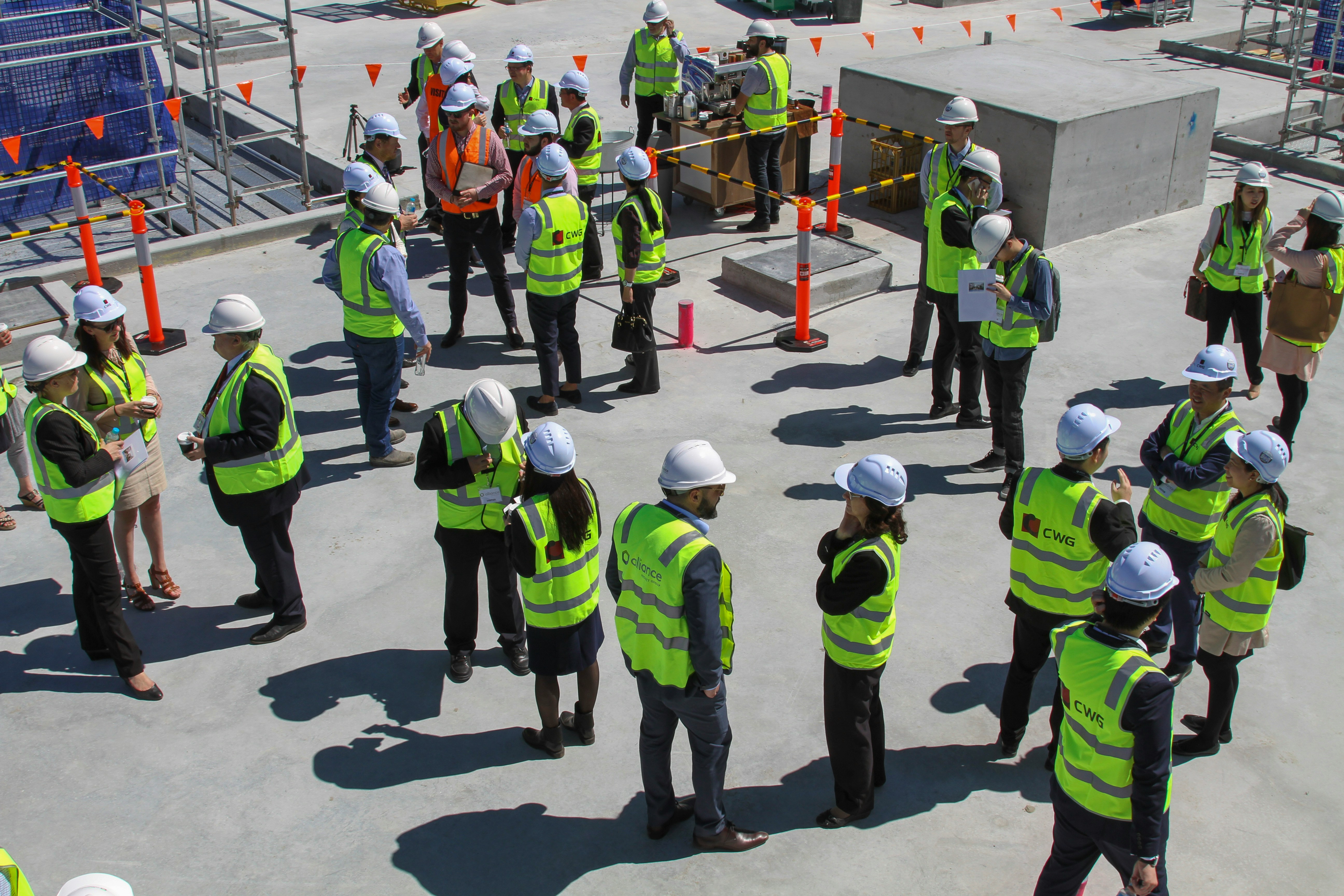
Construction workers at a building site, illustrating the need for constant safety vigilance. In 2024, construction remains hazardous, but technology is enabling unprecedented visibility into field conditions.
With this backdrop, 2024 is seeing construction firms double down on safety innovation. There’s a clear recognition that traditional approaches – toolbox talks, paper checklists, after-the-fact investigations – must be augmented with real-time, data-driven strategies. The concept of field visibility has come to the forefront: the ability to see and know exactly what’s happening on site, as it happens. This encompasses everything from knowing where workers are and if they’re protected, to spotting hazards before they cause harm. Enhanced visibility, paired with proactive compliance management, forms the foundation of an emerging safety paradigm. Leading companies are now asking: What if we could prevent the accident before it occurs? In 2024, that’s no longer a far-fetched idea but a tangible goal thanks to new tech and platforms like OBRA.
Persistent Risks and Their Costs
Despite stronger regulations, the “Fatal Four” hazards continue to threaten construction workers daily. These are: falls, struck-by accidents, electrocutions, and caught-in/between incidents. Falls from roofs, scaffolds, and ladders remain the number one killer, representing over one-third of fatalities. Struck-by injuries – often from falling tools or moving equipment – account for roughly 17% of fatal injuries. Electrocutions contribute around 7–8% of deaths, and caught-in or crushed incidents about 2%. These proportions have held steady, indicating that the nature of construction hazards hasn’t fundamentally changed. What has changed is the scale of projects and complexity of sites, which can amplify these risks if not properly managed. For example, modern urban high-rises and sprawling infrastructure projects involve more workers, higher heights, and heavier machinery than ever – raising the stakes for safety oversight.
The financial and legal consequences of these risks are escalating. OSHA cited over 26,000 safety violations in construction in FY 2024, with penalties totaling $119 million. Topping the list was failure to provide fall protection – 6,557 citations resulting in $48 million in fines. Other common infractions included ladder safety, inadequate training on fall hazards, and lack of head and eye protection. These numbers show that many incidents are preventable lapses in compliance. Every citation represents a hazard that was identified after exposing workers to danger. In addition to government fines, accidents drive indirect costs like project delays, litigation, reputational damage, and lost bids. A serious incident can shut down a site for days or weeks, wreaking havoc on schedules and budgets. Insurance companies, meanwhile, are scrutinizing contractors’ safety metrics and raising premiums for those with poor records. In short, unsafe practices carry a price tag that few firms can afford in today’s tight-margin environment.
Perhaps most importantly, no metric can truly capture the human cost. Families and coworkers bear the emotional toll of each injury or loss. In recognition of this, industries worldwide are embracing ambitious goals like Vision Zero, aiming to eliminate jobsite fatalities entirely. In South Africa, for instance, the mining sector (a cousin to construction in risk) achieved its lowest-ever fatalities in 2024 – a 24% improvement – through collective safety commitments and new tech mandates. This shows that zero harm is attainable with the right approach. Construction can follow suit by attacking its Fatal Four with the same rigor: better planning, better training, and better tools.
Technology’s Role in Safer Construction Sites
One of the most promising developments in 2024 is the surge of safety technology adoption on construction sites. After years of slow digitization, construction is now embracing tools that other industries have used to boost safety and efficiency. A prime example is the rise of smart wearables. We’re seeing wider adoption of smart helmets and vests equipped with sensors and AI to actively monitor worker safety. These next-gen PPE items can detect if a worker has fallen, sense vital signs like heart rate and temperature, and even alert wearers to nearby hazards. In fact, AI-enabled hardhats are already proving effective: in trials, AI helmets reduced accidents by sending real-time alerts about dangers and unsafe behaviors on site. Imagine a helmet that “sees” a worker nearing an unprotected edge and signals a warning – that’s now reality. Similarly, augmented reality (AR) safety goggles can overlay critical information in a worker’s field of view, such as highlighting live electrical wires or showing distance to a crane’s swing radius. These tools elevate situational awareness far beyond what traditional gear could do.
Another game-changer is the deployment of drones and remote imaging for site monitoring. In 2024, drones have become an almost routine presence on large construction projects. They are used to survey for hazards in hard-to-reach areas, monitor work at height, and check that safety measures (like guardrails or trench shields) are in place. Drones provide eyes in the sky, feeding live video to safety managers who can spot issues instantly rather than waiting for a scheduled inspection. This ties into a broader trend of real-time data capture. Many sites now utilize Internet of Things (IoT) sensors – for example, to detect structural vibrations, unstable excavation walls, or toxic gas buildup – and send alerts to managers’ smartphones. Such sensors essentially act as 24/7 sentinels that never get tired or distracted. According to the National Safety Council’s Work to Zero initiative, these kinds of smart tools and AI-driven monitoring can significantly reduce hazardous exposure and enable real-time hazard detection, bringing us closer to eliminating workplace fatalities.
Digital software platforms are equally vital. Mobile safety apps are streamlining everything from daily checklists to incident reporting. Workers can quickly access guidelines, report a near-miss with photos, or receive push notifications about changing site conditions. This instant communication closes the loop on safety issues before they escalate. We’re also seeing an uptick in Building Information Modeling (BIM) and digital twins for safety planning. By simulating the construction process virtually, teams can identify clashes or high-risk activities in advance and plan controls accordingly. In essence, the industry is moving from reactive to proactive safety management, leveraging predictive analytics to foresee accidents. By analyzing historical incident data and current site data together, AI algorithms can flag patterns (like a sequence of tasks that tends to result in an injury) so that interventions can be made before an accident happens.
From Compliance to Culture: Safety as a Core Value
While technology provides powerful new tools, it must be embedded in a strong safety culture to reach its full potential. In 2024, leading construction firms are coupling tech adoption with renewed emphasis on training and empowerment. High-tech safety gear is only effective if workers know how to use it and trust its benefits. That’s why companies are rolling out more engaging, continuous training programs. Many have turned to virtual reality (VR) training simulationsto prepare workers for dangerous scenarios in a controlled environment. Trainees can practice handling, say, a crane failure or a fall rescue in VR, so that if it happens in real life, they respond quickly and correctly. This experiential learning boosts both competence and confidence on the job.
At the same time, there’s a growing recognition of the human factors in safety. Fatigue, stress, and mental health can directly impact alertness and decision-making. Progressive contractors now treat worker well-being as part of the safety program. For instance, 2024 saw more companies implement mental health workshops and fatigue management plans. A worker who feels supported and fit – both physically and mentally – is far less likely to have an accident. Moreover, empowering workers to speak up is key. Cultivating a culture where anyone can halt work if they spot a hazard, without fear of repercussion, has proven invaluable. Frontline crews often have the clearest eyes on emerging dangers, and when they are encouraged to be proactive, sites become inherently safer. In practice, this means management must not only permit but reward hazard reporting and safety suggestions. Some firms have introduced safety incentive programs that recognize teams for strong safety performance or individuals for alerting management to a near-miss (a leading indicator).
A telling trend is that safety is now often led from the very top. Executive leaders at construction companies are tying safety goals to performance evaluations and even to project bonuses. The message is clear: safety is as non-negotiable as quality and budget. This top-down commitment fosters a unified culture. A vivid example from an enterprise perspective: a recent study revealed that 51% of CEOs credit digital transformation (including safety tech investments) with boosting company revenue. In other words, the C-suite sees that safety and success go hand in hand. It’s not an “extra” – it’s integral to running a productive, profitable operation. When everyone from the CEO to the newest apprentice aligns on this mindset, compliance stops being about avoiding fines and starts being about protecting the team and the bottom line. That cultural shift is perhaps the most important safety “technology” of all.
The OBRA Advantage: Bringing It All Together
In an environment where technology and culture must mesh seamlessly, OBRA stands out as the premier solution for construction field visibility, compliance, and intelligence. OBRA’s platform was built with the hard realities of construction sites in mind, and it addresses the very gaps that traditional safety programs leave behind. Here’s how OBRA is elevating construction safety into the digital age:
360° Field Visibility: OBRA integrates inputs from wearable devices, sensors, and mobile apps into one live dashboard. Site managers get a real-time bird’s-eye view of the entire job site – they can see the location of every crew, the status of every piece of critical equipment, and even live feeds from cameras or drones. If a worker enters a restricted zone or a crane approaches an overhead powerline, OBRA’s system can send instant alerts. This level of awareness is transformative: problems that used to go unnoticed until an incident are now caught immediately. As a result, response times to hazardous situations are slashed from hours to seconds.
Proactive Compliance Monitoring: Rather than relying on end-of-day reports or occasional audits, OBRA continuously checks compliance in the flow of work. Are workers wearing their PPE? OBRA’s vision analytics can detect, for example, if someone removed their hardhat or if a safety harness is unclipped. Are trench shoring boxes properly in place? IoT sensors can confirm excavation support in real time. OBRA logs all of this automatically, creating a digital paper trail of safety compliance. This not only prevents accidents (since non-compliance is caught early), but it also keeps your company audit-ready at all times. When OSHA comes knocking or when you’re submitting proof for a new project bid, OBRA’s detailed compliance records demonstrate your safety excellence – a powerful competitive edge.
Operational Intelligence and Insights: What truly sets OBRA apart is its ability to turn raw data into actionable intelligence. The platform applies advanced analytics to identify patterns and trends across your projects. For example, OBRA might highlight that every Friday afternoon your site’s near-miss incidents spike – perhaps indicating worker fatigue that day or end-of-week rushing. With that insight, you can adapt schedules or add a Friday safety huddle. Or OBRA might reveal that a particular subcontractor’s team has an elevated rate of safety deviations, prompting targeted intervention. By surfacing these predictive indicators, OBRA helps you fix issues before they result in an injury. It’s like having a safety analyst on staff 24/7, sifting through your data for the story it tells. Over time, these insights drive continuous improvement, steering you steadily toward zero incidents.
Enterprise-Ready Integration: Construction firms often juggle multiple software systems (project management, HR, compliance tracking). OBRA is designed to integrate smoothly into this ecosystem. It can pull project schedules or BIM data and align safety oversight with work phases. It can export incident logs to your HR or insurance systems. This means OBRA doesn’t add complexity – it streamlines it. Field supervisors can use OBRA’s mobile app to conduct safety checklists and toolbox talks digitally, with results instantly visible to corporate EHS managers. Everyone stays on the same page. And because OBRA is cloud-based with robust security, even large ENR100 contractors can deploy it across dozens of sites with confidence in data protection and scalability.
OBRA’s impact is tangible: companies leveraging OBRA report heightened hazard awareness, fewer accidents, and improved project efficiency. When incidents do occur, investigations are faster and more conclusive because so much data is readily available – you can replay the sequence of events through OBRA’s logs and often pinpoint root causes within hours. This rapid learning prevents repeat mistakes. Perhaps that’s why forward-thinking firms see OBRA not just as a safety tool but as a catalyst for overall operational excellence. Safer sites suffer less downtime and churn out higher quality work. In bids and client meetings, OBRA users can demonstrate a tech-enabled safety program that instills confidence. In an industry where reputation matters, that is pure gold.
Conclusion: Building a Safer Future Now
The construction industry in 2024 stands at a pivotal juncture. The challenges are real – high hazard environments, persistent accident causes, and pressure to improve fast. But for the first time, we have the technology and data insights to meet those challenges head-on. The firms that succeed in the coming years will be those that treat safety not as a cost or mere compliance exercise, but as a core value and performance driver. They will invest in visibility, training, and intelligence, knowing that every dollar spent on prevention pays back tenfold in productivity and trust. We’ve seen how stricter enforcement and better gear have already started bending the curve of fatalities downward. Now it’s time to accelerate that momentum.
OBRA is proud to be driving this transformation in construction safety. By providing sharp, confident, enterprise-ready solutions, OBRA enables project leaders to be surgically precise in managing safety – identifying exactly where the risks lie and neutralizing them in real time. The days of flying blind on the job site are over. When you can see everything, you can change anything that isn’t up to standard. With OBRA’s platform lighting the way, “no one gets hurt” is no longer an aspirational slogan; it’s an attainable outcome grounded in data and diligence.
Insight Density, High Conversion: If you’re a construction executive or safety manager, the insight is clear – embracing field visibility and operational intelligence is not just about compliance, it’s about gaining a competitive edge and protecting your most valuable asset: your people. The path to a safer, smarter construction site is open for you. Are you ready to build the future with OBRA? Reach out to our team to learn how OBRA can integrate with your projects today and set a new standard of safety and performance for years to come.